

Updated: June 2026
Methamphetamine can cause serious health problems that affect people, families, and communities. While the short-term effects of meth can be dangerous, the long-term effects of meth can have an even bigger impact on a person’s health, relationships, and daily life.
Meth changes the way the brain works. It overstimulates the brain’s reward system and can affect emotions, decision-making, and stress levels. These meth long-term effects may continue even after a person stops using the drug.
Many people struggling with meth addiction feel scared, ashamed, or concerned about how meth use may have affected their health and well-being. These feelings are common, but recovery is possible. Understanding the effects of meth can be an important first step toward seeking help and beginning the recovery process.
In this article, we will explore how meth can affect the brain, body, appearance, and mental health over time, as well as whether some of these effects can improve with treatment and recovery.
What does meth do to your body?
Understanding how meth affects the body begins with understanding how it affects the brain. According to the Substance Abuse and Mental Health Services Administration (SAMHSA), meth causes a large release of dopamine, a brain chemical involved in pleasure, motivation, movement, and reward. This surge of dopamine can create intense feelings of energy, alertness, and euphoria, which contribute to meth’s addictive effects.1
Over time, repeated meth use can change the brain’s reward system. As these changes occur, it may become more difficult to feel pleasure from everyday activities or stay motivated without meth. This can make recovery more challenging, which is why compassionate support and evidence-based treatment are often important parts of the healing process.
Meth can also have serious effects on physical health. According to MedlinePlus, methamphetamine use may contribute to heart problems, elevated body temperature, memory difficulties, tremors, sleep disturbances, skin sores, and tooth decay.2 Long-term meth use can place significant strain on multiple body systems simultaneously.
Long-term neurological & brain effects of meth
One of the most serious risks of long-term meth use is meth brain damage. The National Institute on Drug Abuse (NIDA) reports that meth can change the structure and function of the brain, especially in the areas involved in memory, emotions, and decision-making.3
Long-term neurological effects may include:
- Memory problems
- Difficulty learning or focusing
- Poor judgment and impulsivity
- Reduced ability to feel pleasure
- Tremors or movement problems
- Mood changes
Research has also linked meth use to a higher risk of Parkinson’s disease.4 While some brain changes may improve with sustained recovery, others can take longer to heal. Treatment can help support brain function and symptom management.
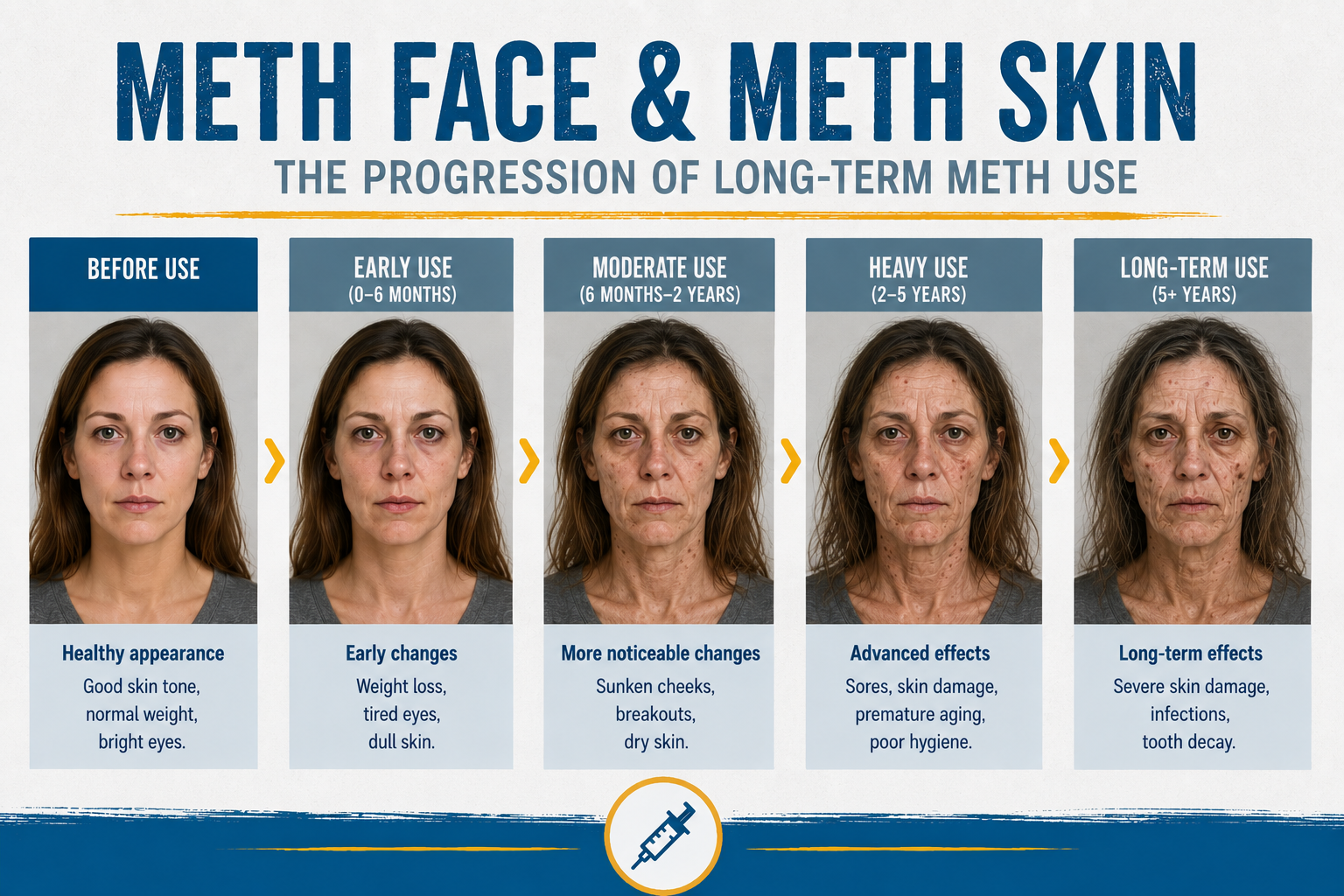
Meth face and meth skin: What long-term use does to your appearance
Long-term meth use can affect a person’s physical appearance in several ways. These changes are health-related effects of substance use and should never be viewed as a reflection of a person’s character or worth.
Factors such as poor nutrition, dehydration, sleep disruption, chronic stress, and reduced self-care can contribute to changes in appearance over time. Some individuals may also experience sensations that feel like insects crawling on or beneath the skin, which can lead to frequent scratching or skin picking and increase the risk of sores or skin infections.2
Long-term physical changes may include:
- Significant weight loss
- Sunken cheeks
- Early signs of aging
- Dry or damaged skin
- Severe acne or sores
- Poor hygiene during heavy use
- Tooth decay and dental damage
Dental problems are another common effect of long-term meth use. Learn more about meth mouth and how meth use can affect teeth, gums, and oral health.
Meth psychosis and long-term mental health effects
Meth psychosis is one of the most serious mental health effects linked to meth use. Research has found that meth can cause psychosis, and some people may develop symptoms that look similar to schizophrenia.5
Meth-induced psychosis may include:
- Seeing things that are not there
- Hearing voices or sounds that are not real
- False beliefs or delusions
- Extreme paranoia
- Severe confusion
A person experiencing meth paranoia may believe they are being watched, followed, or threatened, even when there is no evidence of danger.
Long-term meth use can also increase a person’s risk of anxiety, depression, mood swings, aggression, and sleep issues. These challenges can make it harder to maintain relationships, meet responsibilities, and feel stable from day to day, often leaving people feeling overwhelmed or isolated.
For some, psychosis improves after they stop using meth. For others, symptoms may continue for months or even years. Research also suggests that stress can trigger symptoms again in some people.5 If this happens, it does not mean a person has failed or that recovery is out of reach. Ongoing treatment, mental health support, and compassionate care can help people manage symptoms, build coping skills, and continue moving forward in their recovery.
Are the long-term effects of meth permanent?
Many people wonder whether the long-term effects of meth can improve. The answer depends on several factors, including how long a person has used meth, their overall health, and the type of damage involved.
Stopping meth use can help prevent further harm and give the brain and body time to heal. As recovery continues, some people notice improvements in sleep, mood, memory, physical health, and relationships.
Professional meth addiction treatment can help support this healing process through therapy, relapse prevention planning, and tools for managing cravings, stress, and triggers.
Spokane Falls Recovery Center can help with meth addiction
Living with meth addiction can feel overwhelming, but recovery is possible with the right support. Spokane Falls Recovery Center provides meth addiction treatment for adults in Spokane, Spokane Valley, and communities throughout Eastern Washington.
We offer a full continuum of care for meth addiction, including medical detox, residential treatment, partial hospitalization programming (PHP), intensive outpatient programming (IOP), and outpatient (OP) services. Our team provides evidence-based treatment that addresses the physical and psychological aspects of meth addiction, helping clients build a strong foundation for lasting recovery.
Recovery takes time, but the brain and body can heal. If you or a loved one is struggling with meth addiction, Spokane Falls Recovery Center is here to help. Contact us today to learn more about our meth addiction treatment program and take the first step toward recovery.
Sources:
- SAMHSA. Stimulants. Accessed June 2026.
- MedlinePlus. Substance Use – Amphetamines. Accessed June 2026.
- NIDA. Mind Matters: Teacher’s Guide. Accessed June 2026.
- ScienceDirect. Methamphetamine and Heightened Risk for Early-Onset Stroke and Parkinson’s Disease: A Review. Accessed June 2026.
- National Library of Medicine. A Comparison of Methamphetamine-Induced Psychosis and Schizophrenia: A Review of Positive, Negative, and Cognitive Symptomatology. Accessed June 2026.